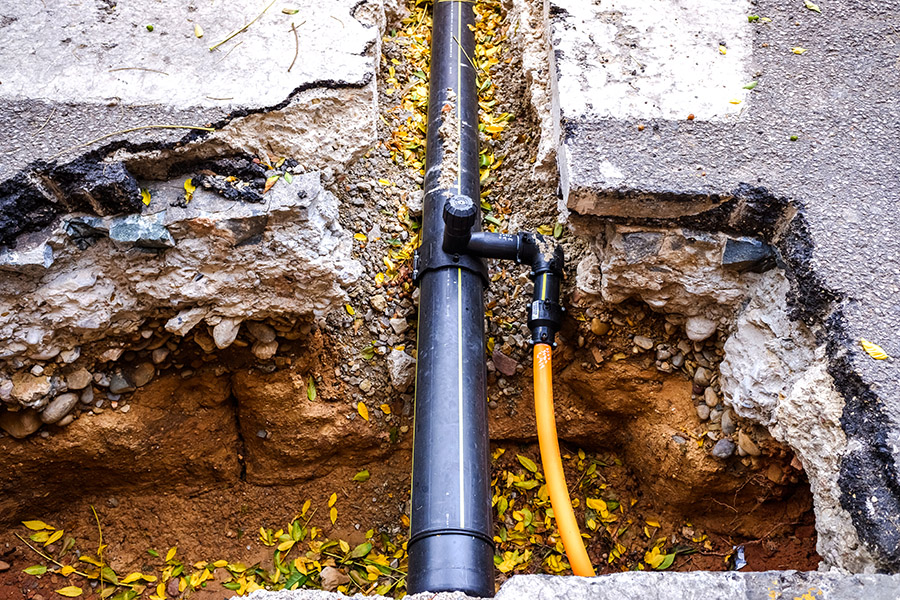
What Happens During an Underground Leak Detection Survey?
Why might you need an underground leak detection survey?
An underground water leak can be difficult to identify because the damaged pipework is often hidden beneath gardens, driveways, pathways or other outdoor surfaces.
Unlike a leaking tap or a visible plumbing problem, an underground leak may continue for weeks or even months before the signs become obvious.
Homeowners across Plymouth, South Devon and East Cornwall may first notice an unexplained increase in water usage, reduced water pressure, damp patches outside their property or the sound of running water when no taps are being used.
An underground leak detection survey helps investigate these symptoms, identify potential problems with buried water supply pipes and determine the most appropriate next steps.
At Leakage Solutions, we provide professional underground water leak detection services, helping property owners understand what may be happening beneath the surface.
Step 1 — Discussing the symptoms of the suspected leak
The first stage usually involves discussing the problem with the property owner.
A specialist will want to understand what has prompted the enquiry and whether there are any obvious signs of a leak.
Common symptoms include:
- An unexpected increase in water consumption
- Reduced water pressure inside the property
- Persistent damp or unusually wet ground
- Water appearing on driveways or pathways
- The sound of running water when appliances and taps are switched off
- A water meter continuing to register usage when no water is intentionally being used
These symptoms do not always confirm an underground leak, but they provide useful information for planning the investigation.
It is also helpful to establish whether the property has experienced previous pipe repairs or recurring problems with its water supply.
Step 2 — Inspecting the property and water supply route
The next stage generally involves a visual inspection of the property and the likely route of the underground water supply pipe.
The specialist may examine accessible pipework, external stop taps, meter locations and areas where water could be escaping.
Particular attention may be given to damp ground, unusual vegetation growth, surface movement or signs of water collecting where it would not normally be expected.
Understanding the route of the water supply pipe is important because underground services do not always follow a direct line between the boundary and the building.
Where available, property plans or previous installation records may help establish the likely pipe route.
Step 3 — Checking whether water is escaping from the supply pipe
Before attempting to locate an underground leak, it is important to establish whether the symptoms are consistent with water escaping from the supply system.
Where a property has a water meter, the specialist may examine meter readings while ensuring that taps, appliances and other water outlets are not being used.
If the meter continues to record consumption, this may indicate a leak somewhere within the metered supply system.
However, meter movement alone does not establish that the leak is underground. Internal plumbing, appliances and other connected systems may also need to be considered.
Isolation checks can sometimes help narrow down which section of the supply system may be affected.
The exact approach depends on the property’s plumbing arrangement and the accessibility of its isolation valves.
Step 4 — Using specialist underground leak detection techniques
Once an underground leak is suspected, appropriate detection methods may be used to investigate its location.
Different techniques are suitable for different types of pipework, ground conditions and leak characteristics.
Acoustic leak detection
Water escaping from a pressurised pipe can generate sound or vibration.
Specialist acoustic equipment may help detect these signals and narrow down the possible location of the leak.
The effectiveness of acoustic detection depends on several factors, including pipe material, water pressure, leak size, background noise and ground conditions.
Tracer gas detection
In suitable circumstances, an approved tracer gas technique may be used to help identify the location of a leak.
The gas is introduced into an isolated pipe section using an appropriate procedure, and specialist detection equipment is used to investigate where it may be escaping.
This method requires suitable equipment and operating conditions and is not appropriate for every installation.
Pressure testing
Pressure testing may help establish whether a particular section of pipework is losing pressure.
It can be useful when investigating suspected leakage or assessing the integrity of a supply pipe.
However, pressure testing does not necessarily identify the exact location of the fault.
The techniques used during a survey depend on the property and the equipment available. Not every survey requires every method.
Step 5 — Narrowing down the location of the leak
The aim of an underground leak detection survey is to identify the likely source of the problem while avoiding unnecessary excavation wherever possible.
Information gathered from visual inspections, supply checks and suitable detection techniques can help narrow down the suspected leak location.
In some cases, the results may point towards a relatively small area of buried pipework.
Other situations can be more complicated, particularly where the pipe route is uncertain, several underground services are present or ground conditions interfere with detection.
Although specialist techniques can significantly improve the investigation process, it is not always possible to identify a leak with absolute certainty without exposing the affected pipe.
A responsible contractor should explain the findings and any remaining uncertainty before recommending further work.
Step 6 — Discussing repair or replacement options
Once the suspected leak has been investigated, the next step is to consider the most appropriate solution.
Depending on the condition of the existing water supply pipe, this could involve a localised repair or replacement of a longer section of pipework.
Localised underground water pipe repairs
Where a single fault has been identified and the surrounding pipework remains in good condition, repairing the damaged section may be appropriate.
This can involve carefully exposing the affected pipe, carrying out the repair and testing the supply before reinstating the excavated area.
Underground water pipe replacement
Where the existing pipe has deteriorated, experienced repeated leaks or is no longer suitable for continued service, replacement may be the better long-term option.
The most appropriate approach depends on the age, material and condition of the pipe, together with the cost and practicality of the proposed work.
Trenchless moling
Where site conditions allow, underground moling can provide a less disruptive method of installing replacement water supply pipework.
Instead of excavating a continuous trench, specialist equipment creates an underground route between planned access points.
This can be particularly useful where pipes run beneath driveways, gardens and paved areas.
Leakage Solutions provides underground moling and water pipe replacement services throughout Plymouth, South Devon and East Cornwall.
How long does an underground leak detection survey take?
The time required depends on the size of the property, accessibility of the pipework and complexity of the suspected leak.
A straightforward investigation may be completed relatively quickly, while more complicated situations can require additional checks.
Properties with shared water supplies, difficult ground conditions or uncertain pipe routes may take longer to assess.
When arranging a visit, it is sensible to explain the symptoms and provide any relevant information about the property’s water supply system.
This helps the contractor assess the likely scope of the investigation.
Why professional underground leak detection matters
Attempting to locate an underground leak without suitable knowledge or equipment can lead to unnecessary excavation and additional expense.
Digging in the wrong location may damage gardens, driveways or other underground services without resolving the original problem.
A professional investigation helps establish the likely cause of the issue before repair work begins.
It can also help property owners make a more informed decision about whether to repair an existing pipe or invest in a replacement.
Leakage Solutions is a family-run business providing underground water supply services across Plymouth, South Devon and East Cornwall.
We are WIAPS approved and a South West Water Approved Contractor, offering professional assistance with underground water leaks, pipe repairs, replacements and moling.
Frequently asked questions
Can an underground water leak be detected without digging?
In many cases, specialist detection techniques can help narrow down the location of an underground leak without extensive excavation.
However, some excavation may still be necessary to confirm the fault or carry out repairs.
Does an underground leak always cause a visible wet patch?
No. Water escaping from an underground pipe may drain into surrounding soil or follow an underground route without producing an obvious wet patch.
This is one reason why underground leaks can remain undetected for some time.
Will an underground leak detection survey damage my driveway or garden?
Initial visual inspections and suitable non-invasive detection techniques may be carried out without disturbing the surface.
However, excavation may be necessary if further investigation or repair work is required.
Who is responsible for repairing an underground water leak?
Responsibility generally depends on the location and ownership of the affected pipe.
Water companies usually maintain their mains and communication pipes, while property owners are commonly responsible for private supply pipes.
Shared supplies and specific circumstances can affect responsibility, so it is advisable to check with the relevant water supplier.
What should I do if I suspect an underground water leak?
If you suspect a leak, check whether water is being used within the property and look for unusual meter activity where a meter is fitted.
Avoid excavating near buried services yourself.
Contact your water supplier if you believe the leak may be on its network, or arrange a professional assessment if the problem appears to involve your private supply pipe.
Arrange an underground water leak assessment in Devon
If you suspect an underground water leak at your property, Leakage Solutions can help investigate the problem and explain the available options.
We provide professional underground water leak detection, pipe repairs, water supply pipe replacement and trenchless moling services throughout Plymouth, South Devon and East Cornwall.
Our friendly, experienced team aims to provide prompt assistance, clear advice and practical solutions tailored to the property.
Call Leakage Solutions on 07714 593 690 or visit leakagesolutions-devon.co.uk to discuss your requirements and arrange an initial assessment.